The Future of Work: How Autonomous Agents Are Reshaping Team Roles in 2026
The Shift Has Already Started
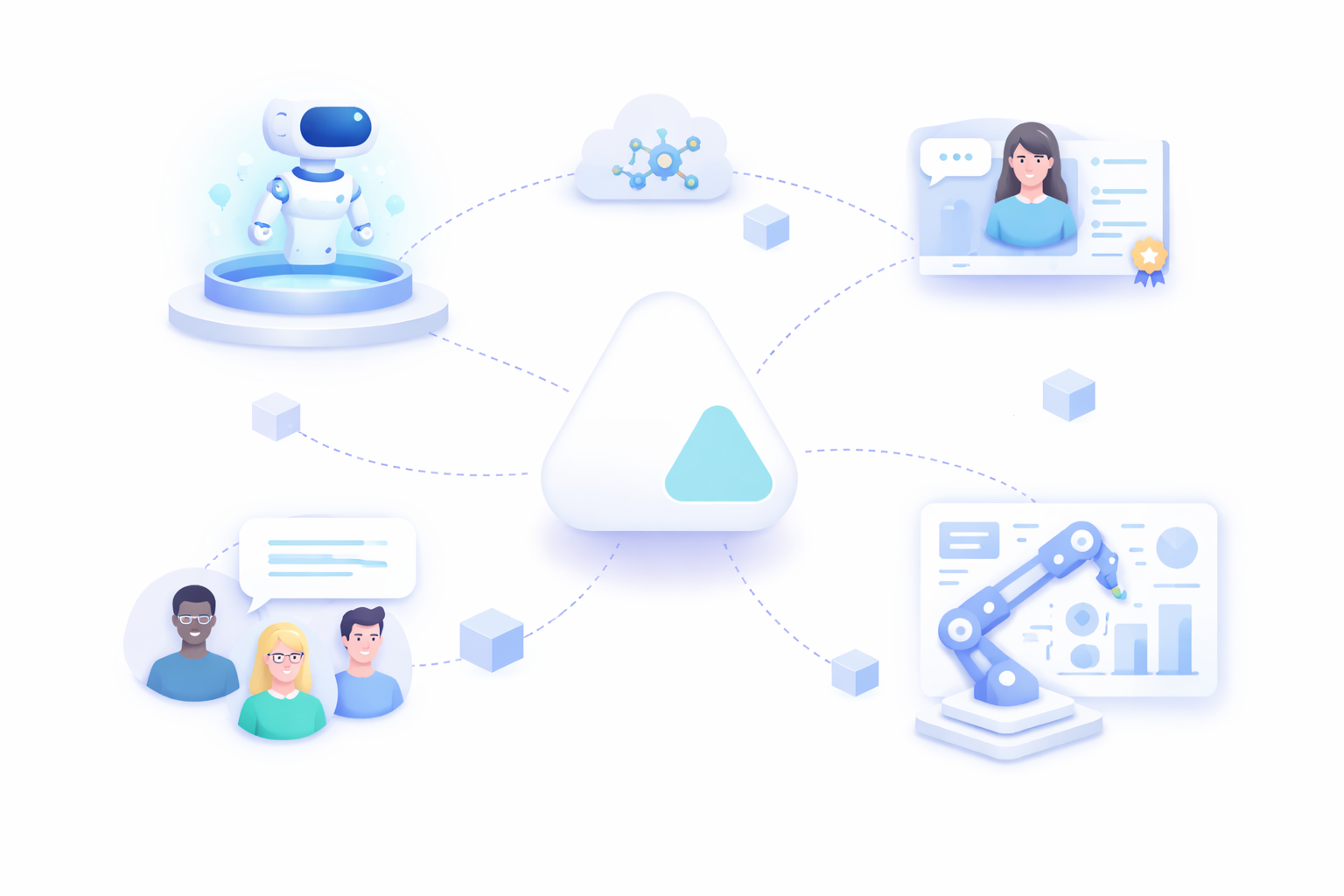
Your workforce is about to transform—and it's already happening. By early 2026, autonomous AI agents are handling the work that used to consume 60-70% of technical teams' time: research, code generation, data analysis, and content creation. The human role isn't disappearing; it's evolving. Teams are shifting from doing the work to validating, deciding, and overseeing what agents produce.
If you manage engineers, analysts, or writers, this isn't coming—it's here. Understanding this shift now determines whether your team thrives or gets caught flat-footed.
What Autonomous Agents Are Actually Doing Now
Autonomous agents in 2026 aren't chatbots that wait for prompts. They're self-directed systems that perceive problems, reason through solutions, and execute independently. As sources like ATX Software and TimeTrex note, we've crossed from "generative AI" (which suggests) to "agentic AI" (which acts).
Real examples happening right now:
- Research & analysis: Agents crawl documentation, pull data, synthesize findings—humans review and validate results.
- Code generation: Not just snippet suggestions, but full feature implementation with testing frameworks. Humans review, test edge cases, and approve for production.
- Content creation: Agents draft blog posts, reports, and documentation. Humans fact-check, adjust tone, and ensure it reflects company voice.
- Workflow automation: Supply chain optimization, customer service routing, anomaly detection—agents handle the repetitive decision-making; humans step in for escalations.
The pattern is clear: agents own the grunt work. Humans own judgment.
What Humans Do Instead: QA, Oversight, Decision-Making
This doesn't mean humans are less valuable—it means they're working differently.
Quality Assurance: Humans now focus on validating agent outputs before they go live. Did the agent's research miss important context? Does the code handle edge cases? Is the generated content accurate and on-brand? This is higher-leverage work than creating the output from scratch.
Oversight & Governance: As agents operate more autonomously, humans become decision-makers about what agents can do. What data can they access? When do they escalate instead of deciding? How do we ensure they align with business goals? This is strategic work, not tactical.
Context & Creative Direction: Humans set direction, define success criteria, and make the calls that require domain expertise or business judgment. "Build this feature" becomes the agent's job. "Here's why this feature matters to our customers" stays human.
Real Example: How openClaw Operates
openClaw—an autonomous AI agent framework—demonstrates this split perfectly. When an openClaw agent needs to research a topic, fetch a webpage, or execute a complex workflow, it operates independently: gathering data, making decisions about tool usage, and building results. But humans (the agents' operators) set policies, validate outputs, and decide on escalations. The agent does the legwork. Humans ensure it's trustworthy.
This is the model spreading across every function—engineering, operations, content, analytics.
Skills to Develop Now
If you're managing teams or planning career development, start here:
- Critical evaluation: The ability to quickly spot what's wrong or missing in agent output is premium skill now. Not coding ability—judgment.
- Prompt engineering & agent design: Fewer people write code. More people write effective instructions for agents and define success criteria.
- Business acumen: Decisions about what to automate and why require deeper strategy thinking than "can we do this?"
- Data literacy: If you're validating agent analysis or using agent-generated insights, you need to read data, not generate it.
- Communication: Humans become the bridge between agents and stakeholders—explaining what agents found, why it matters, and what's next.
The technical bar for individual contributors is dropping (agents handle the complexity). The strategic bar for team leads is rising (you own why and when).
FAQ
Will agents replace my job?
Not if your job is judgment, oversight, or strategy. Jobs that are 100% execution-focused will change. Jobs that are 80% oversight and 20% execution will thrive.
When do I start upskilling for this?
Now. Spend the next 6 months working alongside agents (even ChatGPT or Claude), getting comfortable with validation and prompt engineering. By end of 2026, this is table stakes.
What about security?
Autonomous agents create new attack surface. Ensuring agents validate untrusted inputs (via tools like AgentTrust) becomes standard practice. Security becomes part of agent design, not just infrastructure.
Do smaller teams get left behind?
No—in some ways, they get ahead. A three-person team using agents effectively can do the work of a ten-person team. The bottleneck is learning to trust and oversee them.
How does this affect hiring?
Teams stop hiring for execution speed and start hiring for judgment, architecture, and strategy. Mid-level execution roles compress. Senior oversight roles expand.