Why AI Agents Need Prompt Injection Protection When Dealing with Email
# Why AI Agents Need Prompt Injection Protection When Dealing with Email
AI agents need prompt injection protection for email because email is untrusted input wrapped in a trusted interface. It looks familiar, structured, and business-friendly, which is exactly why it is dangerous. The moment an agent reads inbound email and can draft replies, extract tasks, trigger workflows, or call tools, the inbox becomes part of the attack surface.
A normal email can carry more than human language. It can carry hidden instructions, conflicting intent, forwarded thread content, link bait, malicious formatting, or context that tries to change what the agent does next. If the system treats that content as just another prompt, you are asking the model to separate trusted policy from untrusted instructions on its own. That is not a reliable security model.
If you want the broader background first, read How to Prevent Prompt Injection. If you are designing the full inbox architecture, it also helps to read Email for AI Agents with Guardrails and Policies and Email Webhooks for AI Agents.
Email feels safe, but it is not
Most teams underestimate email risk because email looks slow and boring. It does not feel like an adversarial interface in the same way a public chat widget does. But from the model's point of view, email is just external content.
That matters because an attacker does not need to break into your system in the traditional sense. They only need your agent to read something crafted to redirect behaviour. That could be a sentence in the body, a hidden instruction in HTML, a poisoned summary in a forwarded thread, or a link that causes the agent to fetch more hostile content.
This is why prompt injection in email is such an important category. The agent is not being hacked through code execution first. It is being manipulated through language and context.
The problem gets worse when email triggers actions
The real risk is not that the model reads a bad sentence. The risk is that the sentence changes behaviour.
An email agent might:
- draft a reply to a customer
- extract tasks and create tickets
- route a message to another system
- trigger a webhook
- fetch linked content
- send data to another tool
Once the agent can do those things, a malicious email is no longer just a bad input. It becomes an attempted workflow override.
That is the difference between a toy inbox assistant and a production system. In production, inbound content can influence outbound actions.
If you are new to agent workflows generally, What are Autonomous AI Agents? is the right starting point.
Why the system prompt is not enough
A lot of teams assume they can solve this with a stronger system prompt. They tell the model to ignore hostile instructions, follow policy, and treat email as untrusted.
That helps, but it is not enough.
Prompt injection protection for AI agent email should not depend on perfect model obedience. The model is part of the surface you are trying to defend. If the model is the thing deciding whether it has been manipulated, you have already pushed the security decision too far downstream.
The safer pattern is architectural. Separate the security layer from the reasoning layer.
In plain English: do not let the email hit the agent first and hope the agent behaves. Inspect the message before the agent sees it.
What a safer email flow looks like
A safe email architecture is simple to explain:
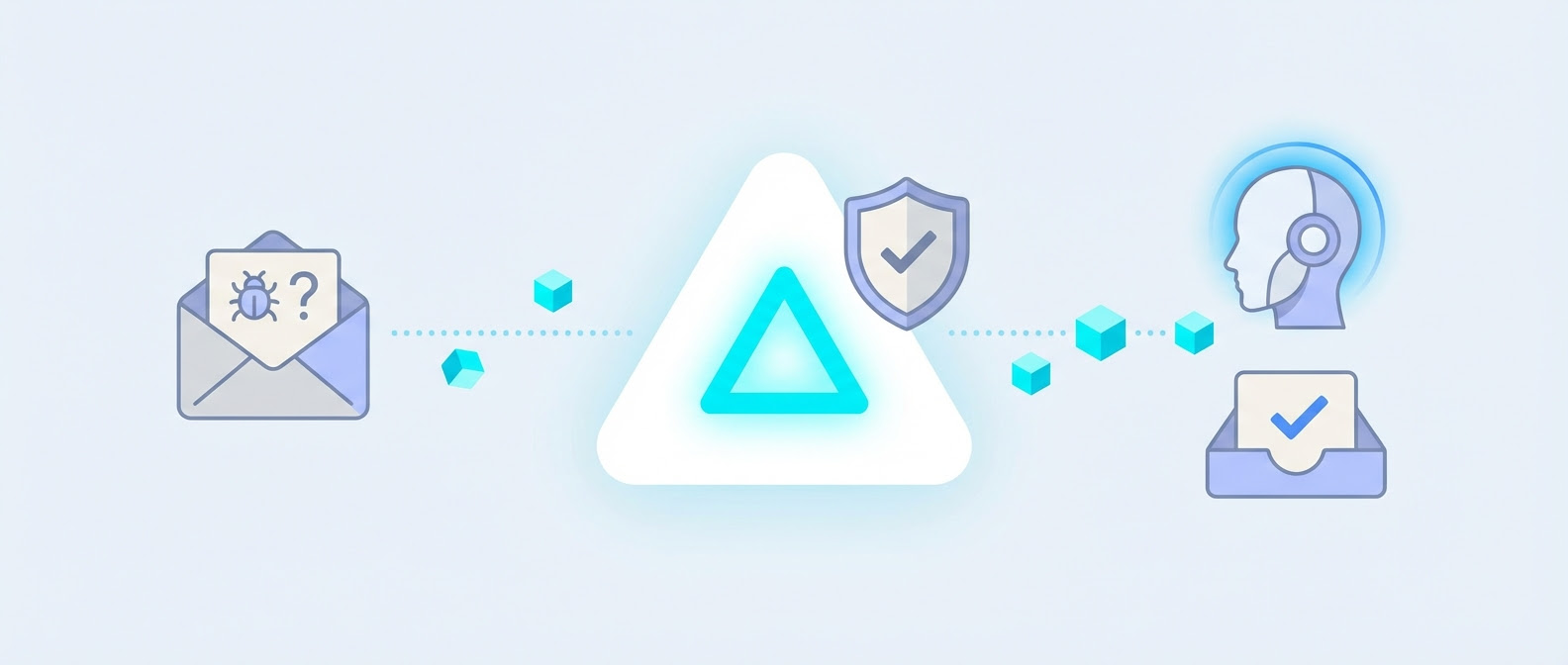
`text Inbound email -> security check -> release, review, or quarantine -> agent -> policy-checked action `
That model matters because it creates a clean boundary.
Before the agent reads the message, the system can check for:
- instruction override patterns
- suspicious formatting or hidden content
- attempts to manipulate tool use
- risky links or fetched context
- intent that conflicts with policy
From there, the message should fall into one of three buckets:
- safe to release
- needs review
- quarantine
That one design choice changes the whole risk profile. You stop treating prompt injection as a model alignment problem and start treating it as an inbox security problem.
Why quarantine matters
Quarantine is important because not every risky message should become a live experiment on your agent.
If the system is unsure, the right answer is not “let the model take a look.” The right answer is “hold it back.” That gives your team a chance to inspect what was flagged, refine policies, and learn what real attacks look like in your environment.
This is especially important for workflows that touch customers, finance, operations, or approvals. Those are the cases where one manipulated message can create external consequences fast.
Prompt injection protection should pair with outbound guardrails
Inbound protection is only half the design.
Even if you filter the inbox well, you still want outbound guardrails. If an agent does decide to act, the send policy should control who it can contact and when. That is why the strongest production pattern is layered:
- inbound email inspection
- quarantine or review for risky messages
- controlled release to the agent
- outbound policy enforcement
- optional Human in the Loop for higher-risk actions
That combination is what turns an agent inbox into real infrastructure instead of a demo.
The practical takeaway
If an AI agent deals with email, prompt injection protection is not a nice-to-have. It is part of the minimum viable security model.
Email is too open, too easy to spoof socially, and too rich in untrusted context to pass straight into an autonomous workflow. The right pattern is to assume the inbox boundary is hostile, validate first, and only then let the agent reason over the message.
That does not remove autonomy. It makes autonomy usable.
If you want to build this as a full workflow, start with prompt injection prevention guidance, add email guardrails, and then connect the inbox to automation with email webhooks for AI agents.